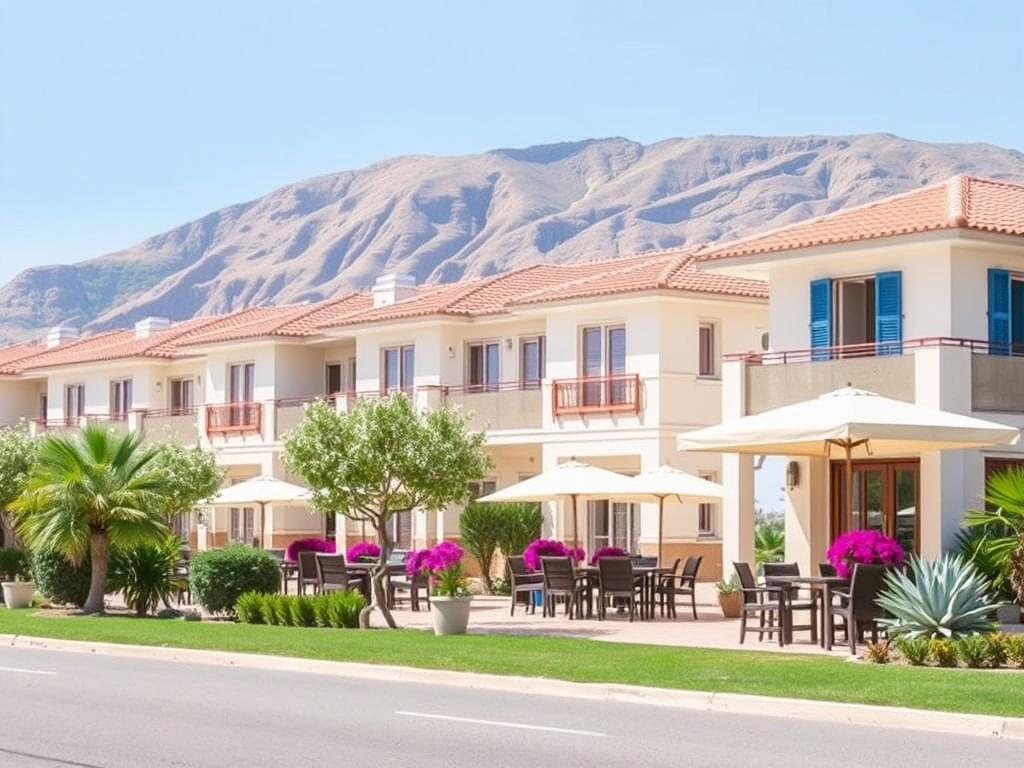
Cyprus attracts retirees for clear reasons: predictable Mediterranean climate, accessible healthcare, and a cost of living that can be favourable compared with many Western European countries. The island offers a spectrum of living options—independent units, serviced apartments, and full assisted living wings—so that those looking for retirement villages Cyprus can tailor their choice to lifestyle expectations and care requirements. This article examines the structural, legal, financial and daily-life elements that determine which retirement environment will suit different cohorts of retirees, and it addresses practical selection and relocation steps.
Many potential residents also consider residence and tax arrangements before committing; if residency is part of the decision, explore options such as Cyprus residency by investment to understand eligibility criteria and timelines. The remainder of this piece focuses on the on-the-ground realities of senior living: architecture, services, local economies, and how retirement villages and senior communities Cyprus coordinate with healthcare providers and municipal infrastructures.
Choosing the right village depends as much on services and health access as on climate and price.
Why Choose Cyprus for Retirement: A Technical Perspective
From a systems perspective, the appeal of retirement villages in Cyprus stems from the convergence of environmental, infrastructural and economic factors. The island’s mild winters and long dry summers lower seasonal maintenance demands and reduce risks that affect frail populations, such as hypothermia or heat-related service interruptions. Transport nodes and regional hospitals are concentrated in a way that supports small-scale, localized senior developments without isolating residents.
Planning authorities in Cyprus typically zone for low-rise, low-density residential developments near established towns to protect agricultural land and provide civic services. Retirement complexes Cyprus are often integrated into these zones to facilitate access to municipal amenities: pharmacies, outpatient clinics, and supermarkets. That integration reduces reliance on private transport for routine needs, a practical advantage for residents who prefer walkable environments.
Infrastructure planning that concentrates medical and retail services near retirement developments improves safety and daily autonomy for older residents.
Macro-factors that influence retirement development
Several macro-factors shape what retirement villages offer: demographic trends, public health investment, and property regulation. Cyprus has experienced a gradual aging trend; public and private sectors respond by increasing capacity for assisted living Cyprus facilities and by supporting policies that allow new retirement homes Cyprus locations to be licensed and operated under defined health and safety standards. Developers anticipate demand for multi-tiered communities—independent clusters with optional service packages and discrete assisted living wings that can escalate care in place.
Regulatory environment and standards
Licensing for care services requires compliance with health, fire, and accessibility regulations. Any retirement complex that advertises assisted living Cyprus services must meet the national health ministry’s criteria for staffing ratios, emergency protocols and medication management. These standards influence building design—wider corridors, step-free access and service cores placed for efficient staff movement—and operational plans, including night-shift medical oversight and regular staff training.
Legal, Residency and Financial Considerations
Legal residency and taxation considerations often determine the feasibility of retiring abroad. Residency status affects access to national health systems, property ownership conditions, and tax residency—which in turn alters pension net income. For international retirees, securing residency can be the first operational step before signing leases or purchasing in retirement villages Cyprus.
Financial models for retirement living in Cyprus vary from outright purchase of an apartment in a retirement community to leasehold models and refundable-deposit assisted living arrangements. Each model has tax and estate planning implications that should be evaluated in advance.
Clarify residency and tax status before making a property commitment to avoid surprise liabilities or eligibility gaps for healthcare services.
Common residency routes and implications
Residential routes include long-stay visas, employment or self-sufficiency permits, and the investment-based pathways that some non-EU nationals use to secure stable residence. Entry under schemes like Cyprus Residency by Investment imposes specific financial thresholds and documentation requirements; residency under these schemes typically yields access to property markets and simplifies certain administrative transitions.
Financial structures used by retirement complexes
Developers often offer several payment structures. The simplest is a freehold purchase where the buyer assumes maintenance and property tax liabilities but benefits from capital ownership. Another model is the lifetime-lease or leasehold with an occupancy fee and service charge; these reduce upfront cost but include ongoing monthly payments. Assisted living wings typically use a combination of a refundable entrance deposit and monthly care fees that scale with the level of assistance required. Prospective residents should request full schedules of fees and sample contracts and insist on transparent contingency reserves for major maintenance.
Typologies: What Retirement Communities Cyprus Offer
Retirement communities in Cyprus break down into typologies defined by autonomy and service intensity. Understanding these typologies clarifies which environment aligns with physical needs, social preferences and budgetary constraints.
Typology choice is a strategic decision: it affects mobility, social interaction, access to medical oversight, and longer-term estate planning. Below are the primary categories.
Select a community typology that matches current needs and anticipates likely future care escalation to minimize disruptive moves later.
Independent Living Communities
Independent living communities are directed at active retirees who require minimal daily support. They provide private apartments or cottages, communal dining options, leisure facilities and on-site social programming. These communities are most comparable to standard condominium living but with tailored accessibility features and community coordination.
Serviced Apartments and Retirement Complexes Cyprus
Serviced apartments provide housekeeping, laundry, and optional meal services. Retirement complexes Cyprus that emphasize service offer flexible packages: residents may choose a few services to create a cost-effective blend of independence and convenience. These complexes are often preferred by retirees who anticipate gradually increasing dependence but do not yet need clinical oversight.
Assisted Living Cyprus
Assisted living units are for people who need help with activities of daily living—bathing, dressing, medication reminders—but do not require intensive nursing care. Staff ratios are higher than in independent living settings; communal spaces are designed for safety and socialization; and emergency response systems are integrated into each apartment. Financial arrangements often combine an entrance fee and ongoing care charges.
Residential Care and Nursing Wings
Nursing wings provide clinical care for residents with substantial medical needs. These settings are subject to the most rigorous health regulations and usually operate with licensed nurses and allied health professionals on site. While many retirement villages Cyprus include small nursing units, large-scale residential care is often centralized in hospital-affiliated facilities near regional centers.
Where to Live: Regional Profiles and Their Offerings
Location influences microclimate, service proximity, and community culture. Cyprus is diverse: coastal towns have distinct patterns from inland, mountainous communities. Below is a compact, technical overview of prominent areas that typically host retirement villages and senior communities Cyprus, focused on practical living factors.
| Area | Climate and Landscape | Local Advantages | Typical Community Types |
|---|---|---|---|
| Paphos | Mild winters, long summers; coastal and low-hill terrain | Large expatriate population, strong private healthcare, well-established leisure amenities | Independent living, serviced apartments, small assisted wings |
| Limassol | Coastal urban climate; warmer and more cosmopolitan | Good hospital access, cultural activities, shopping and transport links | Retirement complexes, luxury serviced developments |
| Larnaca | Coastal plain with proximity to international airport | Convenient travel, mid-sized health facilities, quiet seaside settings | Serviced apartments, boutique independent communities |
| Nicosia (Outskirts) | Inland, more variable temperatures, close to major hospitals | Excellent specialist healthcare, administrative services | Assisted living and nursing wings, medically-oriented communities |
| Troodos Mountains | Higher altitude; cooler summers, snowy winters | Suitable for those who prefer cooler climates and nature; low-density communities | Small-scale independent living communities |
Compare climate, hospital access, and transport links when choosing among regions—those three factors determine daily autonomy more than scenery alone.
Coastal versus Inland trade-offs
Coastal towns give easier access to leisure and are usually more expensive; inland areas offer lower purchase costs and quieter living but may require more travel for specialist care. The choice should reflect mobility expectations: residents dependent on frequent specialist appointments benefit from proximity to larger hospitals, typically found in Limassol and Nicosia.
Design, Safety and Accessibility Features to Prioritize
Design and engineering choices have measurable impacts on resident safety and operational efficiency. Accessibility features are not decorative; they reduce fall risk, reduce staff workload and extend the useful life of a community for residents with progressive needs.
Architectural considerations inform daily routines: natural light, acoustics, and thermal comfort affect mood and cognitive performance, while corridor and door widths determine whether the space supports mobility aids.
Prioritize universal design elements to maintain independence and minimize future modification costs.
Essential architectural features
- Step-free entries and threshold-free transitions between indoor and outdoor areas.
- Door widths and corridor clearances that accommodate wheelchairs and walkers.
- Slip-resistant flooring, adequate handrails, and integrated emergency call systems.
- Proper insulation and shading to manage summer heat without over-relying on air-conditioning.
Operational safety protocols
Operational protocols include emergency response times, medication management systems, staff training programs and scheduled maintenance regimes. Verify that providers run regular fire and evacuation drills, have documented medication error procedures and maintain a reliable record of staff background checks and certifications.
Healthcare Integration and Assisted Living Cyprus
Healthcare integration is the single most important functional attribute of a retirement community. The ability to escalate care—seamlessly moving from independent living through assisted living to nursing care—reduces relocation stress and preserves continuity of care. Assisted living Cyprus services bridge social support and medical oversight and are increasingly modular to let residents add services as needs change.
Continuity of care is a practical safeguard; a community that anticipates clinical escalation reduces both financial and emotional disruption.
How communities partner with healthcare providers
Communities often formalize relationships with hospitals, primary care clinics, and home-care agencies. These partnerships can include preferential appointment scheduling, telemedicine setups, and shared electronic health record access. Such integrations ensure that clinicians who know the community and its systems can provide timely care and that emergency responders are familiar with on-site layouts.
Common assisted living services
Typical assisted living packages include personal care (bathing, dressing), medication management, mobility assistance, physiotherapy sessions, and social activities designed for cognitive engagement. Services are usually tiered with clearly defined triggers—functional assessments that determine when a resident moves between tiers and when nursing interventions are required.
Costs, Contracts and Financial Due Diligence
Cost transparency is a critical differentiator between reputable and risky offers. Contracts should specify all recurring charges, liability for major repairs, and conditions for refunds if a resident leaves or passes away. Perform financial due diligence by requesting audited accounts for the managing entity, clarity on reserve funds for capital works, and a breakdown of staffing spend relative to resident capacity.
Demand transparent financial schedules and audited provider accounts to avoid unexpected liabilities.
Typical cost components
- Acquisition or entry fee: purchase price, refundable deposit, or lease payment.
- Service charges: housekeeping, gardens, utilities in communal areas.
- Care fees: baseline care and incremental fees for higher-dependency care.
- One-off costs: relocation expenses, initial medical assessments, and legal fees.
Negotiation points in contracts
Key negotiation areas include the indexation formula for monthly fees, the definition and timeframe for refunds of entrance deposits, escalation clauses for care fees, and dispute-resolution mechanisms. Many providers include clauses that allow modification of services with notice; ensure that any such modifications carry limits and compensation options, particularly for increases in care fees.
Social Fabric: Activities, Governance and Community Life
Community life affects wellbeing as much as medical services do. Social programming—structured activities, volunteer coordination and shared meals—creates social capital that reduces isolation and improves mental health metrics. Governance structures that include resident councils tend to be more responsive and maintain higher user satisfaction scores because decisions reflect lived experience.
Communities with resident governance and active programming report better outcomes in wellbeing and retention.
Programming and engagement models
Effective communities design activities across multiple engagement bands: light social (coffee mornings), skill-based (language or craft classes), physical (yoga, aquatic therapy), and purpose-driven (volunteering, mentoring). Well-run communities also tailor activities to cultural and linguistic preferences. When evaluating a village, ask for sample activity calendars and participation statistics.
Resident participation in governance
Ask whether the community has a residents’ association or advisory council with real decision-making authority and a formal role in oversight of budgets, programming and safety issues. A binding resident charter provides predictability and empowers users to influence operations, which reduces the risk of unilateral policy changes by management.
How to Choose: A Practical Selection Process
Choosing among retirement villages Cyprus should follow a structured decision process to reduce emotional reactivity. A methodical approach compares clinical metrics, service offerings, costs, and lifestyle fit with personal priorities. Use a scored checklist, conduct on-site visits, and seek verifiable references from current residents.
Use a scored decision matrix and repeat visits under different conditions—weekend, weekday, daytime and evening—to get a realistic picture.
Step-by-step selection checklist
- Define priorities: clinical needs, social life, proximity to family, budget cap.
- Shortlist regions and communities based on those priorities.
- Request comprehensive documentation: contracts, audited financials, staffing rosters, and safety protocols.
- Visit multiple times at different hours; request to join activities anonymously to observe genuine resident engagement.
- Interview staff and current residents; obtain at least three independent references.
- Consult legal and financial advisers to review contracts and residency implications.
Moving In and Living Well: Practical Considerations
Operationally, moving into a retirement community involves more than packing boxes. It requires strategic planning for medical record transfer, estate documentation, and establishing local support networks. Plan for an initial assessment period during which care needs are formally evaluated and service packages finalized.
Maintain digital and hard copies of key documentation—medical histories, medication lists, power of attorney documents and insurance policies—and share appropriate copies with the community and designated family members.
Treat the first three months as a probationary adaptation period: reassess service needs and community fit before committing long-term.
Medical, legal and practical checklists for arrival
- Transfer medical records and nominate a local primary-care contact.
- Ensure medication supply continuity and review prescriptions with a local pharmacist.
- Update wills, powers of attorney and local emergency contacts to reflect the new address.
- Arrange local banking and set up automated bill payments for recurring fees.
- Introduce yourself to the residents’ council and participate in orientation programs.
Addressing Common Concerns and Misconceptions
Certain misconceptions can skew decisions. For instance, many assume that assisted living Cyprus is synonymous with full nursing care; in fact, assisted living is a middle tier that emphasizes support rather than continuous medical intervention. Another frequent assumption is that retirement villages are socially isolating—well-designed communities actively foster social networks and cross-generational programming that counteract isolation.
Differentiate between assisted living and nursing care; each serves different clinical and social needs and carries different contractual terms.
Misconception: Higher cost equals better quality
Price is an imperfect proxy for quality. While some premium developments invest in superior amenities and staff, value can be found in modest communities that prioritize high staff-to-resident ratios and robust training. Evaluate outcomes—staff turnover, resident satisfaction and incident reports—rather than assuming quality from price alone.
Ready to Make Your Move: Practical Next Steps
After synthesizing preferences, legal constraints and financial capacity, execute a staged plan. Start with a reconnaissance visit to two or three shortlisted regions—Paphos or Limassol for coastal choices, Nicosia outskirts for healthcare-centric choices, or Troodos for cooler-climate preferences. Use the visits to validate infrastructure, observe daily rhythms and assess management transparency.
Next, secure residency and legal standing if required; arrange for professional advice to confirm that property or contract choices do not inadvertently trigger adverse tax or inheritance outcomes. If a refundable deposit or lifetime-lease is involved, insist on escrow arrangements and clearly defined refund triggers in the contract.
Finally, plan the move operationally: transfer medical records, set up local banking arrangements, and complete the orientation process with the community. A well-executed transition preserves continuity of care and reduces adjustment stress.
Stage your move: scout, secure legal standing, negotiate clear contract terms, then transition with an orientation and a short-term review plan.
Checklist for the final decision
- Confirm residency and tax implications are acceptable.
- Obtain and vet the community’s audited financials and contract terms.
- Validate healthcare partnerships and emergency response procedures.
- Schedule a trial stay if possible to test the community fit.
- Notify family and legal advisers and transfer essential documentation.
Retirement in Cyprus is an operational choice as much as a lifestyle one. By methodically evaluating regions, typologies, clinical integrations and contractual terms, prospective residents can find retirement communities that deliver safety, sociability and dignity during later life stages. The island’s mix of climates and service offerings means there is rarely a one-size-fits-all solution—but with careful due diligence, you can locate a community that aligns with both present needs and likely future trajectories.
Your Next Chapter: Practical Confidence and Immediate Actions
Write down non-negotiables, book visits, and request clear paperwork. If residency is a gateway to your move, consult advisors early and explore legitimate routes such as investment-based options. Above all, prioritize communities that combine transparent governance, reliable healthcare integration and an authentic social fabric. With this combination, retirement villages Cyprus can provide a secure, stimulating environment for the years ahead.
Act deliberately: clear priorities, legal clarity and on-site validation protect both wellbeing and financial interests.
1. What are the main differences between assisted living and nursing care in Cyprus? Answer: Assisted living provides help with daily activities—bathing, dressing, medication reminders—while nursing care includes continuous clinical oversight by licensed nurses for complex medical needs. Contracts, staffing levels and regulatory requirements differ accordingly. 2. How do I verify the quality and safety of a retirement community in Cyprus? Answer: Request audited financials, staffing rosters, incident logs, regulatory compliance certificates and references from residents. Visit at different times, speak to staff and residents, and confirm formal healthcare partnerships. 3. Can non-EU nationals buy property in retirement villages Cyprus and what residency implications exist? Answer: Non-EU nationals can generally buy property but should verify any minimum investment thresholds and check residency routes. Investment-based residency programs are available but require specific documentation and financial levels; consult an immigration advisor for personalised guidance. 4. What typical costs should I expect when moving into a retirement complex? Answer: Expect acquisition (purchase or entrance fee), monthly service charges, care fees that vary by dependency level, and occasional one-off costs (legal fees, relocation). Ask for full fee schedules and inflation-index clauses before committing. 5. How do communities handle escalation of care if a resident’s needs increase? Answer: Reputable communities conduct regular functional assessments and have tiered care plans. They either provide in-house assisted or nursing care wings or maintain formal transfer pathways to nearby medical facilities, ensuring continuity of care. 6. Are there trial stays available before committing to a community in Cyprus? Answer: Many reputable retirement villages offer short-term stays or trial packages to evaluate fit. Request a trial, review service levels during the stay and use it to test meal service, activities and staff responsiveness. 7. What legal safeguards should I include in a contract for a retirement home Cyprus location? Answer: Include clear fee schedules, refund conditions for entrance deposits, limits on fee increases, dispute-resolution clauses, guarantees about care levels and provisions for early termination or relocation. Have a local lawyer review the contract before signing.