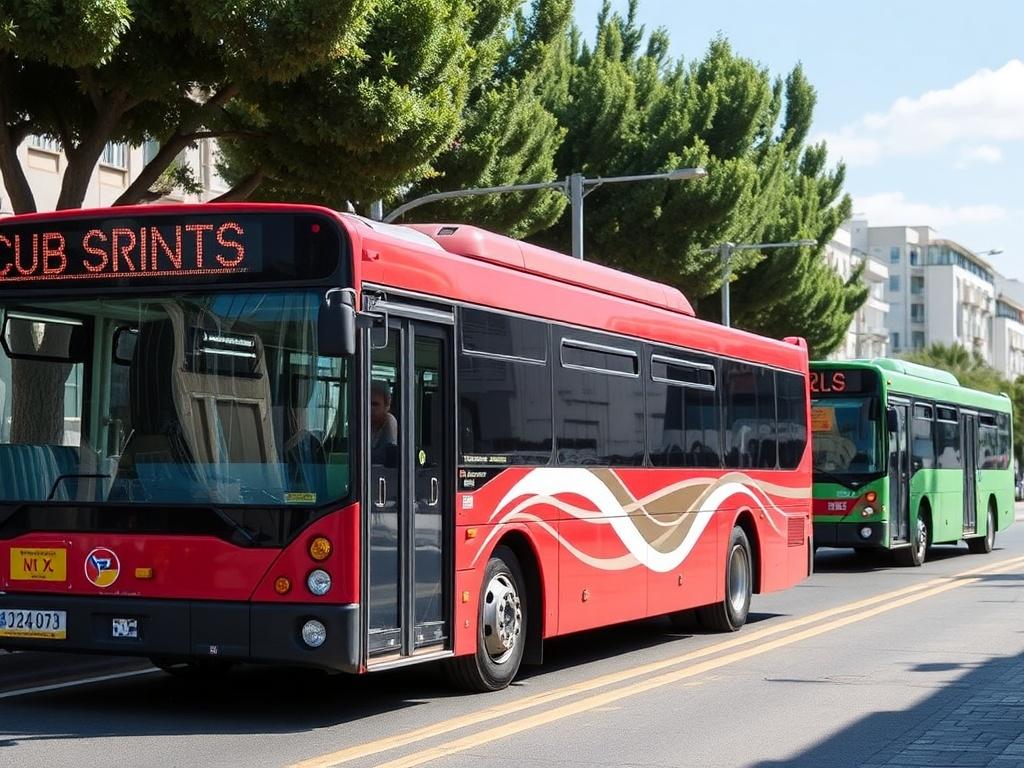
Cyprus, an island nation in the eastern Mediterranean, has experienced considerable development in its urban infrastructure over recent decades. One of the pivotal aspects of this development has been the evolution of its public transportation system, particularly the public bus system, which serves as a vital artery for mobility across its major cities. With the growth in population density and urban sprawl, the efficiency and coverage of the bus network Cyprus offers directly impact daily commuting, economic activity, and environmental sustainability.
The public bus system in Cyprus is primarily designed to connect residential areas with commercial, educational, and industrial zones, as well as to facilitate intercity travel. Understanding how the public transport coverage Cyprus offers operates can shed light on the level of accessibility residents enjoy, while also highlighting the ongoing challenges and improvements within the urban bus transport Cyprus deploys.
The Evolution of the Cyprus Public Bus System
The history of the public bus system in Cyprus reflects the island’s growth and modernization efforts. Early forms of public transport were limited to informal minibuses and shared taxis, primarily concentrating on intercity travel rather than urban transit. However, with the establishment of a more formalized public service in the late 20th century, a structured bus network Cyprus embraced began to materialize.
In recent years, the public bus system has undergone several changes aimed at improving route efficiency, frequency, and overall coverage. The introduction of modern buses with better accessibility features, real-time tracking technologies, and a centralized ticketing system all signal efforts to transform the urban bus transport Cyprus deploys into a more user-friendly network.
Cyprus’s journey from informal minibuses to a structured public bus system marks a significant step toward sustainable and inclusive urban mobility.
These measures are particularly important in larger cities such as Nicosia, Limassol, Larnaca, and Paphos, where growing populations mean that city bus routes Cyprus designs must adapt to dynamic urban landscapes. The challenge lies in balancing the expansion of routes with operational costs and service frequency to ensure the network remains effective and economically sustainable.
Overview of the Current Bus Network Cyprus Maintains
The bus network Cyprus maintains today is a combination of urban and intercity routes aimed at maximizing accessibility while supporting tourism and local residents alike. Urban bus transport Cyprus runs focuses mainly on densely populated areas, connecting suburbs with central business districts (CBDs), transportation hubs, and service points. The network also interlinks with intercity crosspoints serving longer-distance routes.
For instance, Nicosia – the capital city – boasts the most extensive coverage with multiple intracity routes, while Limassol and Larnaca have bus systems that cater to both urban and nearby regional requirements. Paphos, on the other hand, balances its routes between tourist areas and residential neighborhoods, reflecting its dual role as a city reliant on tourism and local commuting.
Below is a summary table highlighting bus network characteristics in the four major cities of Cyprus:
| City | Urban Routes | Frequency | Key Transport Hubs | Coverage Highlights |
|---|---|---|---|---|
| Nicosia | 20+ | 10-30 minutes | Nicosia Central Bus Station | Extensive suburban and CBD connectivity |
| Limassol | 15 | 15-40 minutes | Limassol Central | Focus on coastal areas and industrial zones |
| Larnaca | 10 | 20-45 minutes | Larnaca Bus Station | Links to airport and adjacent towns |
| Paphos | 8 | 30-60 minutes | Paphos Bus Station | Tourist spots and residential coverage |
The data represents an organized, yet still evolving network that seeks to meet growing urban demand. While frequency is generally sufficient in larger cities, less frequent service in smaller cities points to gaps in public transport coverage Cyprus still aims to address.
City Bus Routes Cyprus Implements: Patterns and Priorities
City bus routes Cyprus offers are carefully planned to align with patterns of movement that characterize each urban center’s economic and social structure. In Nicosia, the bus routes are designed to serve both residential districts and major employment zones, medical facilities, and academic institutions. For example, routes commonly run through neighborhoods such as Strovolos and Engomi, providing direct access to the city center and connecting to key bus terminals.
In Limassol, coastal routes service the beachfront areas, catering heavily to commuters who work in the port and industrial zones. The broader aim is to reduce traffic congestion in busy urban areas by offering reliable alternatives to private vehicles. Larnaca integrates its bus routes with proximity to Larnaca International Airport, enabling airport workers and travelers to access the city center and other parts of the island.
Paphos’s city bus routes often emphasize tourism, connecting landmarks such as the Paphos Archaeological Park and sea-side promenades with suburbs and hotels, balancing the needs of residents with tourists’ mobility requirements.
What distinguishes city bus routes Cyprus implements is their combination of serving daily commuters and visitors—a demand-driven approach that attempts to optimize ridership efficiency and route sustainability.
The diversity of city bus routes Cyprus adopts reflects the unique economic, cultural, and geographic realities of each urban hub.
Public Transport Coverage Cyprus Provides: Strengths and Gaps
Public transport coverage Cyprus provides can be assessed by examining accessibility, frequency, geographic distribution, and inclusivity of services across its urban and rural areas. In the island’s major cities, the bus network delivers reasonable geographic coverage, with most neighborhoods and commercial centers connected. However, peripheral and rural settlements still face limited access to public transport, highlighting persistent gaps.
A major strength lies in recent investments to modernize the fleet and integrate technology, such as mobile apps for route planning and real-time arrivals. This has improved user experience considerably. Additionally, the government’s subsidies contribute to maintaining low fare prices, encouraging use among low- and middle-income groups.
Nevertheless, challenges remain. Some urban fringe areas lack high-frequency service, and certain routes do not operate during late evening hours, limiting options for shift workers. Moreover, occasional issues with punctuality and road congestion can affect service reliability. These factors have an impact on public perception and operational efficiency of the bus network Cyprus offers.
Addressing these gaps requires further expansion of routes, especially to less populated areas, and increased frequency along heavily trafficked corridors. Investment in dedicated bus lanes and traffic signal prioritization would also improve service quality.
Urban Bus Transport Cyprus Relies Upon: Future Perspectives
The future of urban bus transport Cyprus relies upon is closely linked to broader urban planning and environmental sustainability goals. The island’s limited land resources and significant seasonal tourist influx demand smart transport solutions that can reduce congestion and lower emissions.
Plans to modernize the bus network include introducing electric and hybrid buses to replace older diesel models, thereby reducing the carbon footprint associated with urban transit. Furthermore, the government is exploring multimodal integration, linking bus routes with potential future rail or tram systems to further enhance mobility options.
Smart city initiatives also emphasize digital infrastructure upgrades, including advanced scheduling software and passenger information systems, to improve service reliability and passenger convenience. Enhanced data collection on usage patterns supports continuous optimization of city bus routes Cyprus employs.
Public engagement and awareness campaigns are also part of the approach, encouraging commuters to shift from private cars to public transport where feasible. This shift is critical to fulfilling broader environmental goals and ensuring urban bus transport Cyprus relies upon remains relevant and sustainable.
Innovations in fleet technology, multimodal integration, and data-driven route planning are set to define the future landscape of urban bus transport Cyprus offers its citizens.
Key Factors Shaping Bus Network Cyprus Depends On
The bus network Cyprus depends on is shaped by several pivotal factors, including urban demographics, economic activity, tourism patterns, and government policy. Population growth in cities like Nicosia and Limassol spurs demand for more efficient public transport solutions, while economic hubs require robust transit connectivity to sustain workforce mobility.
Seasonal fluctuations, especially due to tourism, impose varying demands on the network. Bus routes must be flexible enough to accommodate these changes without compromising regular commuter service. The network’s adaptability is thus a central consideration for planners.
Government investment priorities directly influence the quality and expansion capacity of the bus network. Allocations toward new vehicles, infrastructure improvements, and technological enhancements support gradual progress in public transport coverage Cyprus can provide.
Lastly, public feedback and ridership data remain critical in refining route efficiency and service times. The bus network Cyprus maintains reflects a dynamic system, constantly evolving in response to urban development and user needs.
Urban Challenges and Opportunities in Cyprus Public Bus System
Urban environments naturally pose challenges for any public transportation system. Cyprus is no exception. Congested roadways, limited dedicated bus lanes, and competition with private vehicles complicate efforts to maintain high-frequency, reliable service. Peak hour traffic delays particularly challenge punctuality, reducing attractiveness of buses for commuters used to faster, more flexible transport options.
Despite these challenges, there exist clear opportunities to enhance the urban bus transport Cyprus provides. Leveraging technology to optimize route scheduling or implement dynamic routing can improve overall efficiency. Dedicated infrastructure such as bus-only lanes or prioritized traffic signals can alleviate congestion challenges affecting bus speeds and reliability.
Moreover, integrating cycling and pedestrian-friendly infrastructure with bus stops encourages healthier, more sustainable first-mile/last-mile connectivity for passengers.
The rising emphasis on sustainability, coupled with growing public acceptance, presents a promising context for enhancing Cyprus’s public bus system to significantly improve urban mobility standards in coming years.
Urban challenges underscore the need for innovative, integrated solutions to unlock the full potential of the Cyprus public bus system.
Enhancing Public Bus System Coverage Across Cyprus Cities
Improving public bus system coverage in Cyprus cities requires a multipronged strategy that balances expansion with operational excellence. Expanding route maps to underserved areas, especially urban peripheries and outlying villages, would increase accessibility, helping to reduce private car dependency.
Enhancing service frequency and extending operating hours can also make public transport more viable for diverse commuter schedules. Investments in larger fleets with modern, eco-friendly buses ensure capacity growth aligns with increasing demand and environmental targets.
Collaboration between public authorities, private operators, and technology providers fosters innovation and operational improvements. Creating seamless interfaces for ticketing, route planning, and service updates enhances the user experience, encouraging ridership growth.
Additionally, strategic planning that anticipates urban growth and future mobility needs will result in a scalable and flexible network, adaptable to demographic shifts and technological advances.
Transforming Urban Mobility: Where Cyprus Public Bus System Heads Next
The transformation of the Cyprus public bus system into a holistic, modern urban mobility solution is underway, but the road ahead is complex. It requires sustained commitment to infrastructure investment, continuous innovation in urban bus transport Cyprus could leverage, and a focus on improving passenger satisfaction.
Key future milestones include greater automation in operations, integration with emerging mobility options such as shared electric scooters and ride-hailing services, and a continued push toward environmentally sustainable practices.
Public awareness remains essential, incentivizing modal shifts to public transport through pricing, convenience, and reliability improvements. The success of these efforts will redefine urban connectivity and quality of life in Cyprus’s cities for decades to come.
Redefining Mobility for Cyprus Cities: A New Chapter for Public Transportation
In summary, the Cyprus public bus system stands at a crucial juncture. Its historical roots reveal a transition from informal transport to a structured, expansive network. Current city bus routes Cyprus implements effectively serve urban centers but also expose gaps in peripheral and rural access. Public transport coverage Cyprus maintains offers a foundation for equitable mobility, yet challenges persist around frequency, reliability, and environmental sustainability.
Looking forward, integrating technology, expanding coverage, and adopting green transport solutions will be critical in transforming urban bus transport Cyprus relies on. The evolving bus network Cyprus depends upon reflects a broader vision of a connected, accessible, and sustainable future for its urban populations.
Ultimately, redefining mobility in Cyprus cities is about more than just buses—it’s about building an urban environment where access, efficiency, and sustainability coexist, ensuring all residents and visitors experience the benefits of a truly modern public transport system.
Frequently Asked Questions
- What cities in Cyprus have the most extensive public bus coverage?
Nicosia has the most extensive coverage with over 20 urban routes, followed by Limassol and Larnaca with fewer routes but focused on key urban and regional connections. - How frequent are the bus services in major Cyprus cities?
Bus frequency ranges between 10 to 40 minutes in cities like Nicosia and Limassol, while smaller cities such as Paphos have less frequent service, sometimes up to 60 minutes between buses. - Are the buses in Cyprus accessible for people with disabilities?
Yes, modern buses introduced in recent years include accessibility features like low floors and designated spaces for wheelchairs to enhance inclusivity. - What measures are being taken to make public transport greener in Cyprus?
Cyprus is investing in electric and hybrid buses to reduce emissions and plans to expand infrastructure for more sustainable urban bus transport. - Does the Cyprus public bus system operate at night?
Night service availability is limited, with most routes ceasing operation by late evening; expanding night service remains a challenge for the transport authorities. - How can passengers plan their trips on the Cyprus bus network?
Passengers can use official mobile apps and online platforms that provide real-time route and schedule information to facilitate trip planning. - Is the public bus system Cyprus offers reliable during peak traffic hours?
Traffic congestion during peak hours can cause delays, affecting punctuality; however, efforts such as dedicated bus lanes are being considered to improve reliability.